

Spina Bifida

Spina bifida is a condition that people are born with and affects them throughout their lives. It is not a disease and cannot be spread like an infection or illness.
Spina bifida is a neural tube defect (NTD). The neural tube develops into the brain, the long bundle of nerves that make up the spinal cord, and the tissues that enclose them. With spina bifida, an incomplete formation of the spinal cord creates an opening through which nerves and spinal fluid may protrude. A sac covered by skin or a thin membrane called a cele forms on the unborn baby’s back. Nerves around the cele may be damaged or improperly formed.
The location of the cele determines the number of spinal nerves involved. The impact on a person can range from mild to severe and may include:

Download Understanding Hydrocephalus

Spina bifida is a life-long condition with ongoing medical challenges. Each of the four main types of spina bifida, listed below, affect individuals differently.

OCCULTA results in the hole in the lower segment of the spine and the bones are not properly closed. It may involve an abnormality of the vertebrae or vertebrae and spinal cord. Many people with this condition only become aware of it if they experience unexplained incontinence, chronic back pain, or changes in the muscles of their legs.
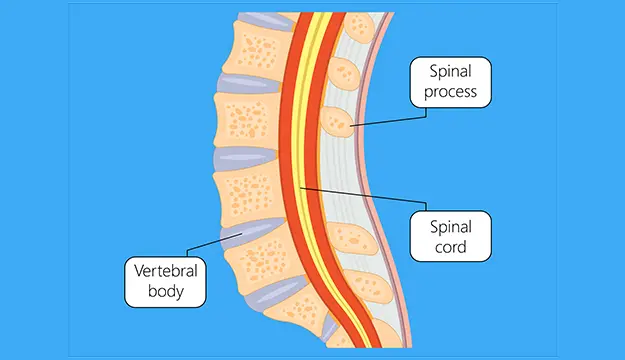
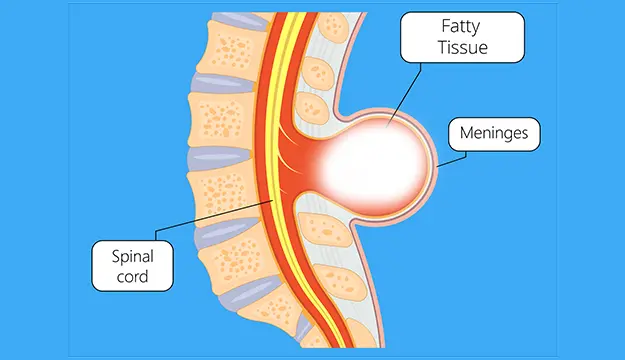
LIPOMYELOMENINGOCELE causes abnormal fatty tissue to protrude through a defect in the vertebrae that forms in the buttocks or lower spine. Damage to the nerves may occur from compression of the nerves by the fatty mass or abnormal formation of the spinal cord. Symptoms of lipomyelomeningocele may include a pinkish patch, dimple or skin tag in the lower spine area, muscle weakness of legs, foot deformities, loss of sensation in patches on the lower legs, feet and buttocks, back pain, and bladder and bowel incontinence.

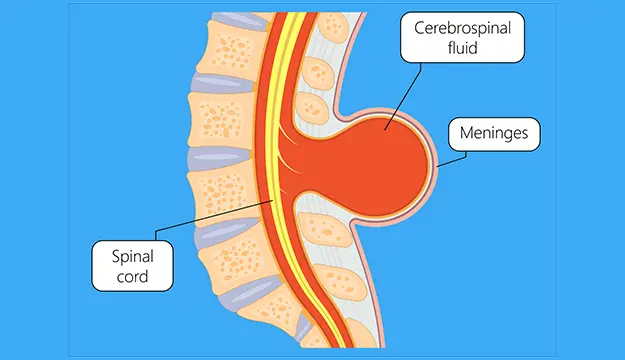
MENINGOCELE develops when bones do not close fully around the spinal cord. The meninges (coverings of the spinal cord) are pushed out through the opening to form a sac containing cerebrospinal fluid (CSF) that is covered by skin. The spinal cord remains in the spinal column and the nerves may not be as severely affected. There may be motor or sensory changes after the sac is surgically repaired.
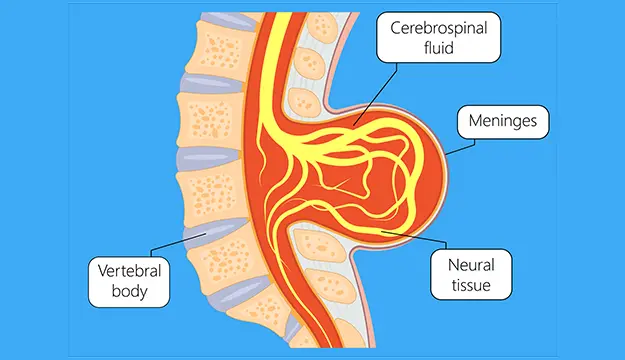
MYELOMENINGOCELE is the most severe form of spina bifida. It occurs when the bones fail to close around the spinal cord. The meninges and the spinal cord protrude through the opening in the spine to form a sac that is usually transparent, not covered by skin and contains cerebrospinal fluid (CSF). The spinal cord fails to develop properly and spinal nerves are damaged.
People living with spina bifida may experience additional health challenges including:
Hydrocephalus which is the excess accumulation of cerebrospinal fluid (CSF), affects more than 85% of people with spina bifida. can cause serious damage to the brain impacting its ability to function.
Walking to some extent can be accomplished by many children with spina bifida. This is dependent on the location of the cele and how well muscles in the legs work.
Small Spastic Bladder the bladder is small and holds little urine which results in uncontrolled bladder muscle contractions that may lead to back up of urine and enlargement of the kidneys and wetness.
Large Flaccid Bladder which occurs when the bladder becomes unusually large and can lead to frequent infections.
Bowel Challenges which may include frequent “accidents” or fecal incontinence due to weak anal sphincter muscles or decreased sensation due to nerve damage. Severe constipation may also occur because waste material moves more slowly through the bowel causing too much water to be absorbed.
Tethered Cord Syndrome which may cause bladder changes (increased urgency and frequency and urinary wetness, urinary infections), bowel changes (urgency and frequency in bowel soiling, changes in stool consistency), back pain, leg and/or foot changes and, scoliosis.
Syringomyelia or Syrinx which may result in increased scoliosis and changes in sensation such as “pins and needles” and/or weakness of the hands and arms.
Chiari II Malformation which may cause a small percentage of people to experience aspiration (food and liquid entering the lungs), apnea (stop breathing for more than 5 to 10 seconds), hypersensitivity to objects in the mouth, light and loud sounds, gagging, choking, vomiting, stridor, tightness and/or weakness of arms, arching of head backwards, and/or a weak suck when using a bottle in breast-feeding babies. Most individuals with myelomeningocele have Chiari II Malformation.
The exact cause of spina bifida is not known. Development of the condition is likely the result of a number of factors. These may include genetics of both parents, environmental factors, and other factors not yet identified.
In most babies, the neural tube forms by the 28th day after conception. With spina bifida, a portion of the neural tube does not develop or close properly. Bone, muscle and skin cannot form around the spinal cord where the tube is open.
Prevention of spina bifida
Some women may be more at risk and should consult a physician before becoming pregnant. Those at risk include women who:

Folic acid has been proven to reduce the risk of neural tube defects (NTDs), including spina bifida, by as much as 70%. Women of child-bearing age who are sexually active should take a daily multi‑vitamin which contains at least 0.4 mg of folic acid – even if they are not trying to get pregnant. Taking the appropriate amount of folic acid at least three months prior to conception as well as during the first 3 months of pregnancy is essential for all women.

Download Folic Acid Brochure

Fetal Surgery One of the most recent and exciting developments in the history of treatment for spina bifida is the introduction of in-utero surgery. In some babies diagnosed before 25 weeks gestation, surgery to close the opening in the baby’s back while they are still in the womb may be an option.
Because spinal cord damage can worsen during the baby’s development in the womb, repair of the opening may prevent further damage and offer significantly better results than repair done after birth. It may also reduce the risk of developing hydrocephalus, improve mobility and the chances the individual will be able to walk independently.
This surgery is now available in Canada. If you are given a prenatal diagnosis of spina bifida, talk to your health care provider for more information about your options as soon as possible.
While there is no cure for spina bifida and it does bring lifelong challenges, it is important to remember that most of these challenges can be managed. Attitudes and expectations, assistive devices, community supports and a host of services all contribute to independence and quality of life. Participation at school, work and the community as well as knowing when to ask for assistance are also important. People living with spina bifida can live happy, productive, and fulfilling lives.

Spina Bifida FAQs and Guides

SPINA BIFIDA FAQ’s

Spina bifida is a neural tube defect that occurs within the first four weeks after conception. It is a neurological condition that people are born with. A portion of the neural tube does not develop or close properly. Bone, muscle and skin cannot form around the spinal cord where the opening occurred and nerves surrounding the area may be damaged or improperly formed.
Approximately 26 in 100,000 babies in Canada are born with some form of spina bifida.
The exact cause is not known. Development of spina bifida is the result of a number of factors. These may include genetics, the mother’s diet, a lack of folic acid and several unidentified environmental factors present before and during conception and in early pregnancy may contribute to the development of the condition.
There is still much to learn about the prevention of spina bifida. However, medical research has proven that folic acid can reduce the risk of having a neural tube defect (NTDs) affected pregnancy, by as much as 70%. Folic acid is essential for the development of a baby’s spine, brain and skull in the early weeks of pregnancy. Any woman who can become pregnant risks having a baby with an NTD. It is recommended that all women who can become pregnant take a multivitamin with at least 0.4 mg of folic acid every day.
Breakthrough treatment of in-utero fetal surgery to close the baby’s back while they are still in the womb may prevent further damage and offer better results than a traditional postnatal repair. It may also reduce the development of hydrocephalus and improve mobility outcomes.
Spina bifida is a life-long chronic neurological condition that can result in mild to severe paralysis depending on the extent of nerve damage and location of the cele. The impact may include partial or total paralysis, loss of sensation in lower extremities, challenges with bowel and bladder function, difficulty with hand skills, vision and hearing, learning, social skills, memory and problem solving are also common.
People with spina bifida require life-long medical care. Treatment occurs shortly after birth for babies who have not had the in-utero fetal surgery and whose spinal cord and nerves are exposed. Surgery is performed by a neurosurgeon to close the opening and reduce the risk of further damage to the spinal cord and nerves. A person with spina bifida, will likely require bowel, bladder and orthopedic treatment throughout their life-span. Many while also need physical therapy, mobility supports such as braces, crutches, walkers or wheelchairs at various stages of life.
Studies indicate that up to 73% of individuals with spina bifida have a latex sensitivity and/or allergy. Latex is the sap from the rubber tree. It is used in a variety of common items like balloons, erasers, surgical gloves, contraceptives and elastic fabrics. Sensitivity to latex may cause symptoms such as watery eyes, runny nose, sneezing, rashes, hives, swelling and itching on contact and in severe cases, respiratory distress. Unfortunately, as with most allergies, the only effective treatment is avoidance. Using latex free products as much as possible is recommended. Consult an allergist for further information.
50% of people with spina bifida will develop osteoporosis. Research shows that it occurs at a younger than the general population. Children and adults with spina bifida have lower bone density in their lumbar spine and in their hips than the general population. This is true for those who ambulate and those who use wheelchairs, but is higher in those that don’t walk. Decreased bone density may also be due to medical conditions, medications or surgeries.
Occulta is a minor deformity of one or two vertebrae that doesn’t get much attention, yet it can significantly decrease quality of life and cause pain for those who develop secondary neurological issues such as tethered cord. This can become a serious issue and requires a thorough neurosurgical assessment of symptoms and most likely an MRI or CT scan to determine what is causing the pain and what treatments are available.

SPINA BIFIDA Guides and Resources

Neurological
Issue

Understanding Learning Issues with Spina Bifida

Special Equipment and Mobility Aids

Understanding Bowel Function

Understanding Bladder Function

At Hydrocephalus Canada (HC), we understand how difficult it can be, even when things are going smoothly, to face the added challenges and concerns of living with spina bifida.