
If you or a loved one are managing bowel or bladder issues related to spina bifida, you’re not alone. Hydrocephalus Canada offers information, support, and connections with others who share their experiences and tips.
Many individuals with spina bifida have a neurogenic bowel or bladder, meaning the nerves that signal the need to go may not function properly. Achieving continence is important for health, independence, and well-being and requires ongoing support from healthcare providers.
This section provides guidance to help you manage bowel and bladder continence. For one-on-one support, email info@hydrocephalus.ca or call 1-800-387-1575. Great additional resources are available throughout this page from our partner, Coloplast.
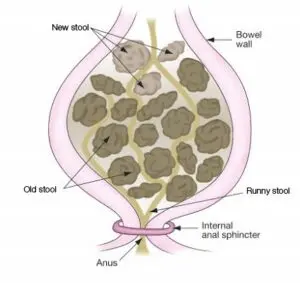
Most individuals with spina bifida will have common bowel problems related to the damage to the nerves responsible for the sensation of bowel fullness and emptying. Constipation, impaction, diarrhea and bowel accidents are all possible. Signs of bowel problems can include hard stool, no stool, poor appetite, abdomen is enlarged and feels hard, blood in the stool or loose stool that leaks around the hard stool.
Exercise, drinking plenty of fluids and eating a healthy diet high in fiber can help in achieving a bowel program that works for you.
If a bowel management program is not effective, surgical treatments are available.
Most individuals with spina bifida experience bladder function issues due to nerve damage that disrupts communication between the bladder, sphincter muscles, spinal cord, and brain. The degree of bladder control varies depending on the location and extent of the lesion. Bladder management programs are tailored to each person’s needs and the methods that work best for them.
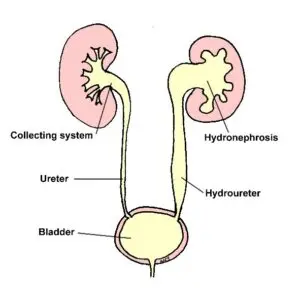
The primary goal is to protect kidney function and manage urinary continence. When the bladder doesn’t work properly, it may not empty fully, and urine can flow back into the kidneys. This can increase the risk of urinary tract infections (UTIs) and other serious health complications.
Our partner in bladder health, Coloplast Canada, has some great information on avoiding urinary tract infections:
Regular visits to a urologist is paramount. These visits could include various tests to monitor your bladder and kidneys such as a renal and bladder ultrasound, renal scan, intraveious pyelogram (IVP), voiding cystourethrogram, urodynamics, cystoscopy and urine tests.
Proper management can help avoid these problems that can lead to life-threatening issues! There are too many tragic stories to sit back and do nothing. Bladder infections and other problems are serious and need to be treated quickly.
An effective bladder program will reduce common problems such as UTI’s, overfull bladder, bladder and kidney stones, reflux, hydronephrosis and bladder accidents. Even the food you eat and what you drink can make a difference in the health of your bladder.
We care about your health and well-being and we want to let you know about an important change to Canadian clinical recommendations for intermittent catheter use. As of 2020, Canadian nurses no longer support the re-use of intermittent catheters.1Instead, Canadian urologists and nurses recommend single use intermittent catheters, ideally those that are hydrophilic or pre-lubricated.

UTIs are a constant concern for catheter users. The new Canadian recommendations for catheter use recognize this, and work to help Canadian catheter users keep their bladder healthy.

Re-using intermittent catheters causes unnecessary bacteria contamination, which may result in urinary tract infections
(UTIs).
Single-use hydrophilic or pre-lubricated catheters are recommended because they appear to lower the risk of UTI, may result in less urethral trauma, and have a higher convenience and ease of use compared to conventional uncoated catheters.
Need help with coverage? Product reimbursement in your province can be complex and overwhelming. Coloplast’s new Reimbursement Specialist offers expert guidance on insurance coverage, claims, and eligibility to ensure you get the personalized support you need.
For more information, please contact us at 905-829-7665 or at ca_reimbursement@coloplast.com Monday-Friday 9am-5pm ET
For more information please contact us at 1-866-293-6340 or at casupport@coloplast.com
*findings not specific to Coloplast catheters
Clean Intermittent Urethral Catheterization in Adults – Canadian Best Practice Recommendations for Nurses. Developed by Nurses Specialized in Wound, stomy and Continence Canada, Canadian Nurse Continence Advisors, Urology Nurses of Canada, and Infection Prevention and Control.1st Ed. 2020.
Can Urol Assoc J 2020;14(7):E281-9. http://dx.doi.org/10.5489/cuaj.6697
Coloplast Market Study_IC Research_2015_Data on file
Bogaert GA, Goeman L, de Ridder D, Wevers M, Ivens J, Schuermans A. The physical and antimicrobial effects of microwave heating and alcohol immersion on catheters that are reused forclean intermittent catheerisartion. Eur Urol. 2004;46(5):641-6
Chan JL, Cooney TE, Schober JM. Adequacy of sanitization and storage of catheters for intermittent use after washing and microwave sterilization. J Urol. 2009;182(4 Suppl):2085-9
Besoin d’aide en matière d’assurance? Le processus de remboursement de produits de votre province peut s’avérer fastidieux et compliqué. Chez Coloplast, notre spécialiste en remboursement offre des conseils avisés sur la couverture d’assurance, les réclamations et l’admissibilité pour assurer que vous obtenez le soutien dont vous avez besoin. N’hésitez pas à communiquer avec nous par téléphone au numéro sans frais 1 (905) 829-7665 ou par courriel à l’adresse ca_reimbursement@coloplast.com du lundi au vendredi de 9 h à 17 h (HNE)
N’hésitez pas à communiquer avec nous par téléphone au numéro sans frais 1 (866) 293-6340 ou par courriel à l’adresse casupport@coloplast.com
*Résultats non spécifiques aux cathéters de Coloplast.
Clean Intermittent Urethral Catheterization in Adults – Canadian Best Practice Recommendations for Nurses. Developed by Nurses Specialized in Wound, stomy and Continence Canada, Canadian Nurse Continence Advisors, Urology Nurses of Canada, and Infection Prevention and Control.1st Ed. 2020.
Can Urol Assoc J 2020;14(7):E281-9. http://dx.doi.org/10.5489/cuaj.6697
Coloplast Market Study_IC Research_2015_Données consignées.
Bogaert GA, Goeman L, de Ridder D, Wevers M, Ivens J, Schuermans A. The physical and antimicrobial effects of microwave heating and alcohol immersion on catheters that are reused forclean intermittent catheterisartion. Eur Urol. 2004;46(5):641-6.
Chan JL, Cooney TE, Schober JM. Adequacy of sanitization and storage of catheters for intermittent use after washing and microwave sterilization. J Urol. 2009;182(4):2085-9.